 Clarify
 Nederlands
 English
What is an installation management contract?
In management and maintenance we have 3 levels:
- Strategic (Business plan, Strategy & Policy) – directing the organisation and activities
- Tactical (Multi-year plan, Cost-effectiveness and Adjustment) – organising the organisation and activities
- Operational (Performance and Resources) – performing/executing the organisation and activities
The three levels are directly connected to each other (image 1).
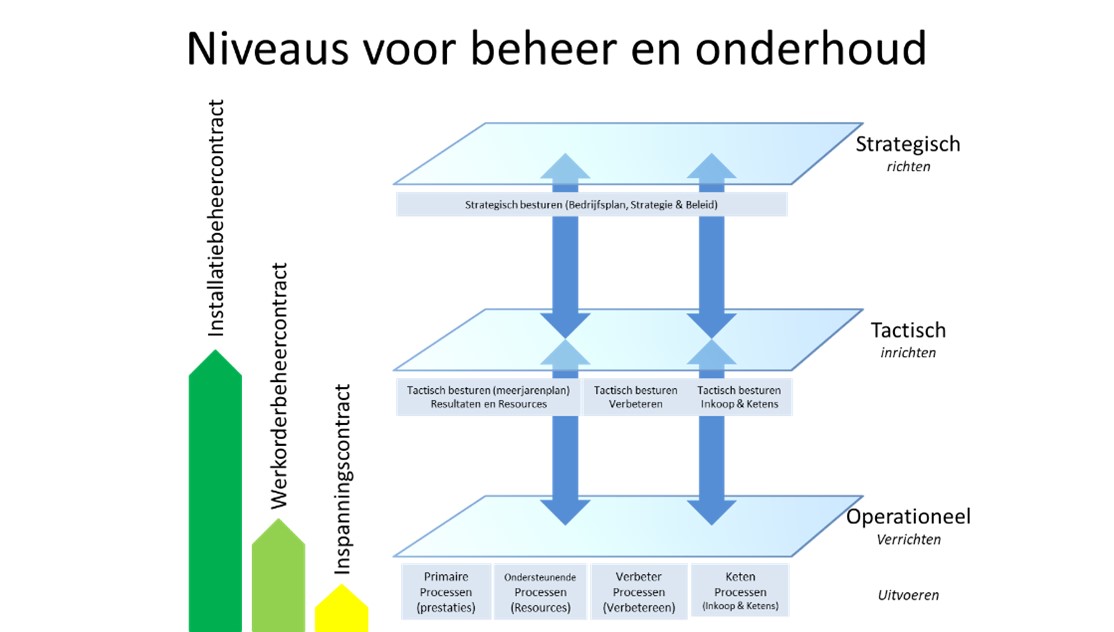
Image 1
The contracts that municipalities conclude with the maintenance parties cover one or two of these levels:
- The Best-efforts contracts and Work-order management contracts are limited to the Operational level.
- An Installation management contract differs from these by also covering the Tactical level.
An Installation management contract addresses 2 levels:
- Tactical level – The design of the management vision, in which the municipality remains fully responsible at the strategic level (including determining policy, objectives, performance and the risk acceptance and costs).
- Operational level – Here the contractor takes responsibility for carrying out the preventive and corrective maintenance.
The critical success factor of an Installation management contract lies in the Tactical management (image 2).
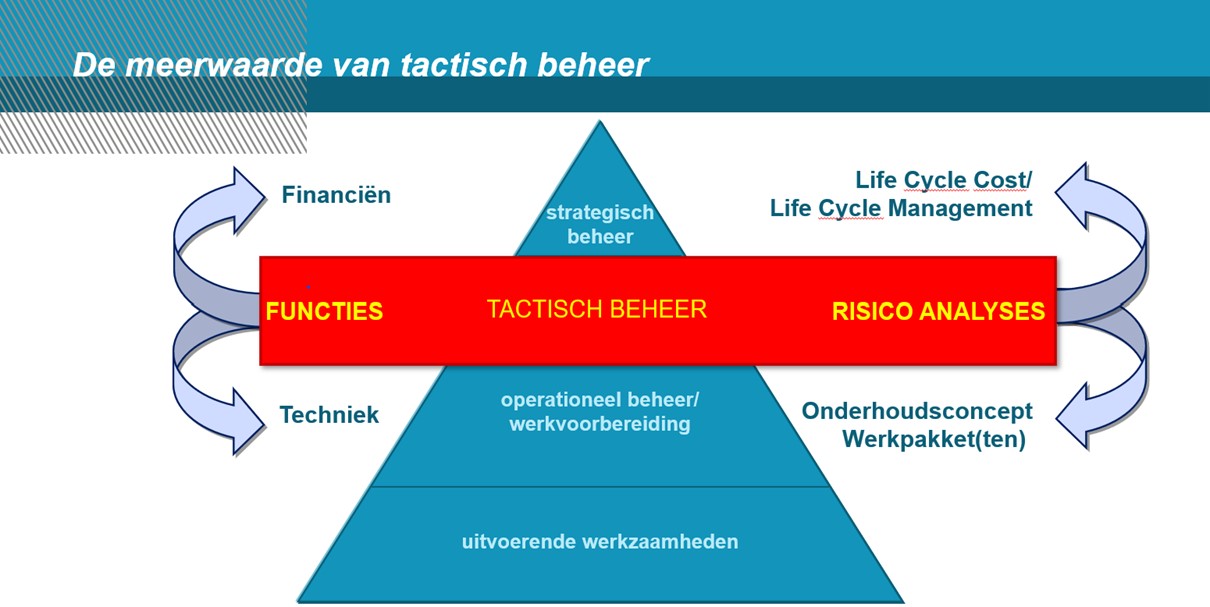
Image 2
In Tactical management, municipality and contractor work closely together to keep improving the maintenance. The contractor takes the initiative for this, as if the installations were their own property. Because the maintenance is largely set up in a risk-driven way, we substantiate all proposed improvements in a simple way from the triangle of Performance, risks and costs (image 3).
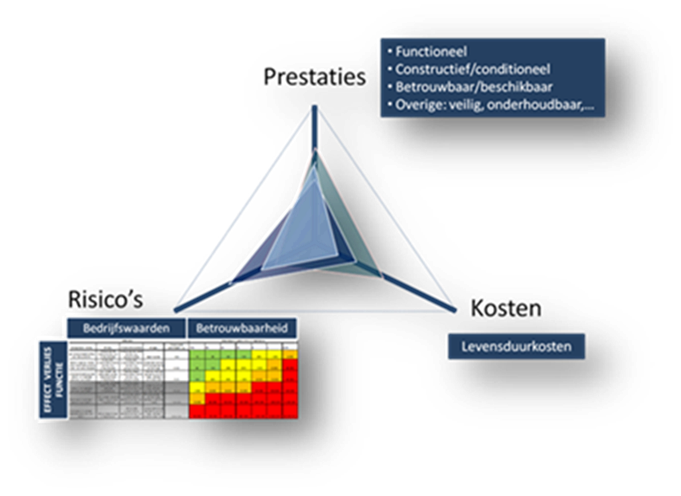
Image 3
In the next part of this series we will go into the management vision that the installation management contract addresses.