 Clarify
 Nederlands
 English
Block diagrams part 1
What is a block diagram?
When we want to understand composite objects or complex installations, we usually do so by looking at the smaller parts. An analysis of a small part is clear and simpler.
But what does that small part do in the larger whole, and how are the parts connected to each other? To make that clear, we added block diagrams to Clarify.
What is a block diagram?
A block diagram shows the composition of the complete object/installation. This visual representation is often easier to read and understand, especially for engineers, than the lists of risk analyses.
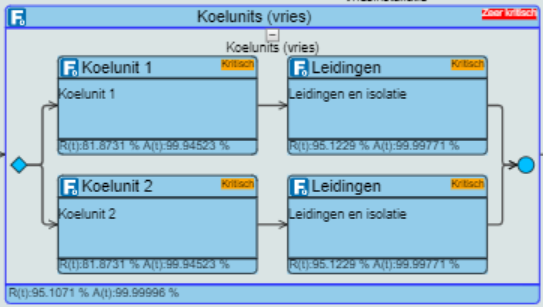
The configuration of the blocks gives immediate insight into series of elements and the possible parallel-connected parts. Parallel-connected parts can increase capacity or provide redundancy. That too is shown directly in a block diagram.
What is the added value of a block diagram?
With a block diagram we ultimately gain immediate insight into the reliability and availability of the parts and the whole. The block diagrams are easy to expand or collapse per group. See images 1 and 2.
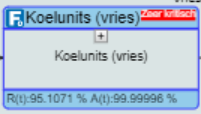
Image 1
Image 2
You also gain immediate insight into the properties that apply to the selected block. See image 3.
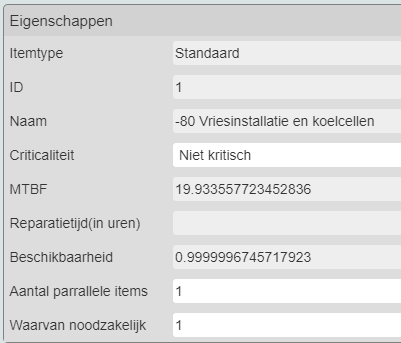
Image 3
But you can do much more with a block diagram. We explain this in part 2 of this series.