 Clarify
 Nederlands
 English
Action Plan Part 8
Effect of Inspections
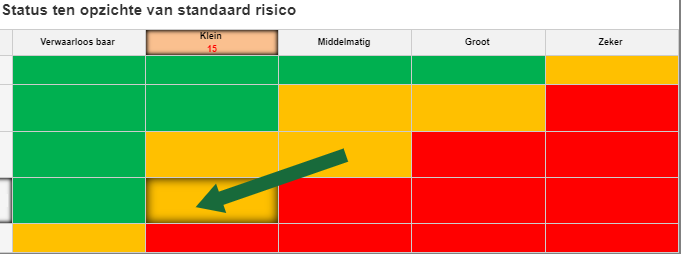
In this provisional final part of this series Risk Management Action Plan, one more interesting addition. We are going to discuss the effect of inspections.
The entire risk model is mainly a theoretical model that is largely based on statistics.
In practice – on average – this theoretical model will be followed well. Individual assets/objects can of course deviate from this average. That is precisely why we also want to be able to steer at an individual level.
We have therefore adapted the theoretical model so that it is dynamic. We did this by letting inspection results feed directly into the theoretical condition of the asset/object.
Think, for example, of the wear of bearings. On average, bearings under full continuous use are calculated to have a service life of 4 years. There will be bearings that do not reach this and there will also be ones that far exceed it. To replace them at the right moment nonetheless, without being much too early or too late, we use the tool of inspection.
In this way, NEN and CROW inspection results are also processed directly into the theoretical models; see the image below.
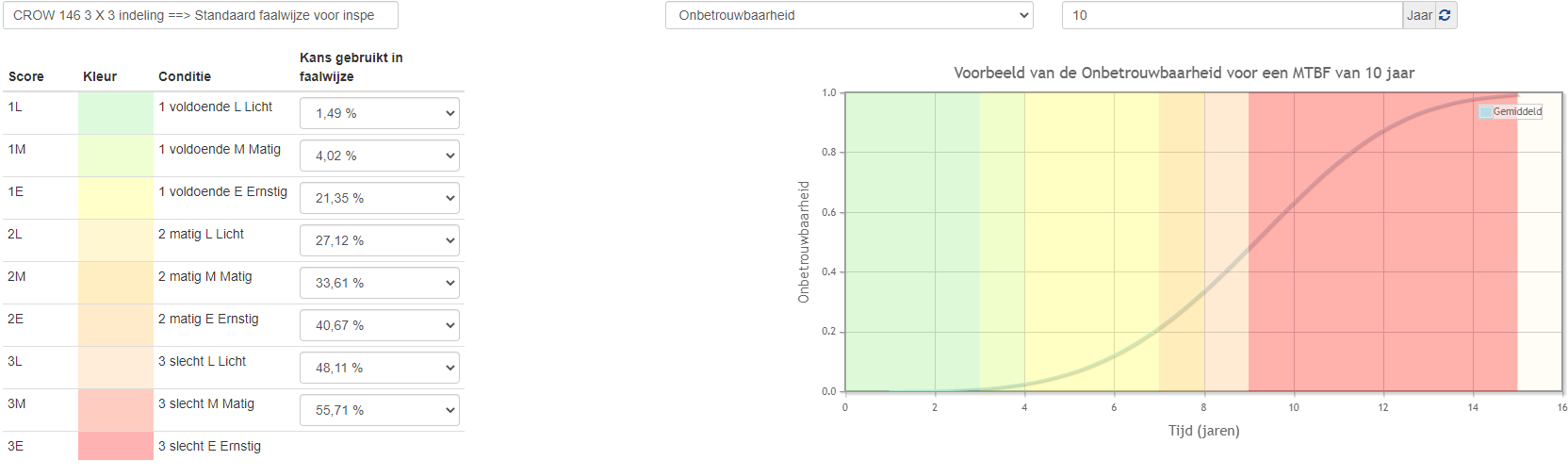
With the inspection data we can estimate well whether the wear is progressing in line with the theory or whether it is faster or slower. The observed degradation is compared with the theoretical model and, on the basis of the deviation, adjusted to the newly expected moment of failure. This is plotted very clearly in the risk matrix, so that the shift in the risk is immediately apparent; see the images below.
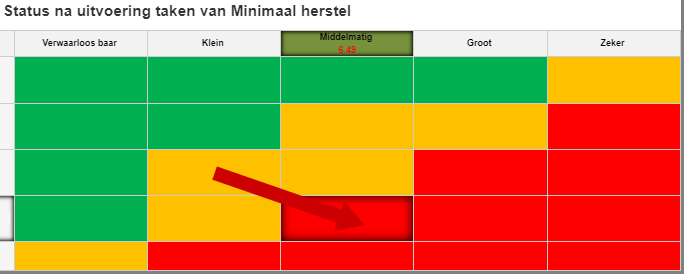
The measures to prevent the failure are thereby also brought forward or pushed back.
In this way Clarify software makes the entire risk management process:
🔶 clear
🔶 pragmatic
🔶 and dynamic