 Clarify
 Nederlands
 English
Plan of action part 7
Multi Criteria Analysis
We are already well advanced in the Risk Management Action Plan. With the functional object that we linked to the risk, we create an efficient and effective basis for linking assets. This gives all these assets the same risk and the same mitigating measures. Convenient and easy to manage.
Now it is possible that a technically identical object at different locations nevertheless has to be rated somewhat differently. Think of a technically identical bridge built at different locations. We still want to give one bridge priority when we have to choose, for instance because the budget does not stretch far enough. How do we do that in a risk-driven system?
For this we developed the Multi Criteria Analysis. The MCA makes it possible to differentiate between technically and risk-technically identical objects. By assigning distinguishing criteria to the asset (the bridge), we can amplify or reduce the risk.
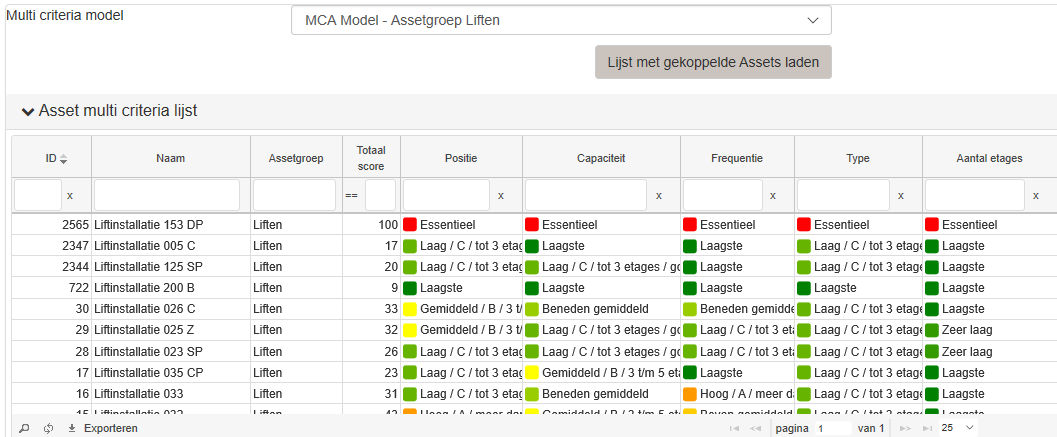
In the case of the bridge we look at the amount of traffic that crosses the bridge and how much commercial and recreational shipping passes underneath. In the image below you can see how we set this up in Clarify for the bridges.

This gives each bridge an MCA score that directly influences the weighting of the risks. A high score increases the risk, a low score reduces the risk. The most important items appear at the top in Clarify, the least important at the bottom.
In the FMECA we see the asset-specific risk. You can see it in the image below.
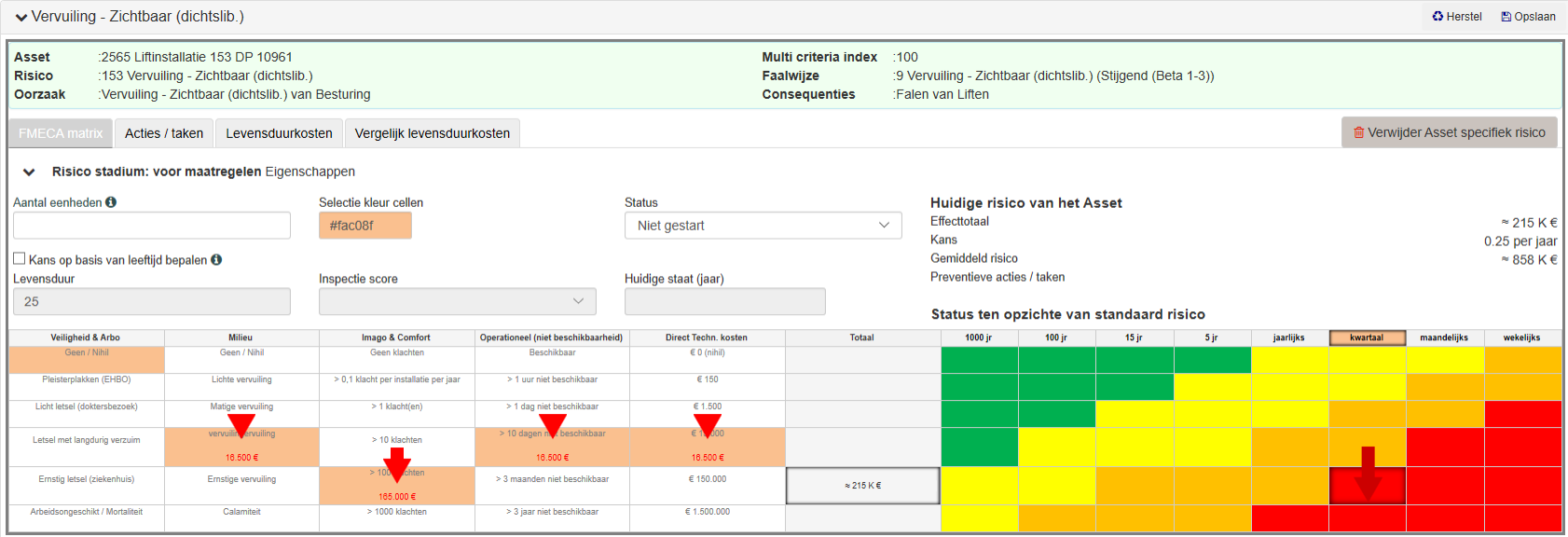
The red arrows indicate that the original effects have been increased by the high score on the MCA. With this, Clarify creates a unique system that can easily differentiate technically identical objects.
The annual plan or multi-year plan can be ranked by risk score. This immediately gives a good picture of where the greatest and where the smaller risks lie. Aligning the execution and deployment of the available budget is now simply laid out in order.
Our final topic in this series concerns the direct processing of input from inspections into risk management.
Read more about this in part 8, The effect of inspections, the last part of our ‘Risk Management Action Plan’.