 Clarify
 Nederlands
 English
Plan of action part 2
Risk matrix and Failure forms
In part 1 of our series ‘Risk Management Action Plan’ we looked at the importance of risk management and discussed the 6-step model of risk management. In this next part 2 we explain the topics Risk Matrix and Failure Modes.
When we want to manage in a risk-driven way, we need to make and record basic agreements. These basic agreements help your organisation to reason and act from a shared standpoint.
Every organisation has a number of goals in mind. Usually these goals are expressed in policy and strategy. These goals relate directly to what your organisation wants to achieve on various (core) values, such as:
🔶 safety
🔶 availability or accessibility of a product or service
🔶 appearance or image
🔶 sustainability, the environment
🔶 costs
Probabilities and effects
Risk-driven management examines the extent to which disruptions prevent goals from being achieved.
We test the sensitivity of risks using a matrix. On the one hand we look at how great the probability is that a disruption occurs. On the other hand we look at what effects this has on the (core) values.
The Clarify software package offers every possibility to form and record this matrix and thereby creates the heart of risk management. It lets you easily assess how often something happens and what effects come with it.
The colour coding in the matrix is usually chosen so that it is immediately clear how the risk is assessed:
🔶 red: very serious, intervene immediately
🔶 green: nothing we really need to worry about
🔶 and everything in between
You can see an example of an entered risk in the image below:
Failure modes
To work in a risk-driven way, we want to know the following things about a risk:
🔶 cause
🔶 manner of failure
🔶 consequence
🔶 probability
The consequences were covered in the paragraph above. In the effect columns we indicate what we take into account when a failure mode occurs. So not only the ‘not functioning’ and how to remedy it, but also the consequences for the important (core) values in the organisation.
But what exactly is a failure mode?
A failure mode is a mechanism that causes us to no longer perform as desired. That can range from less well to not at all. Below we describe the 3 most important failure modes.
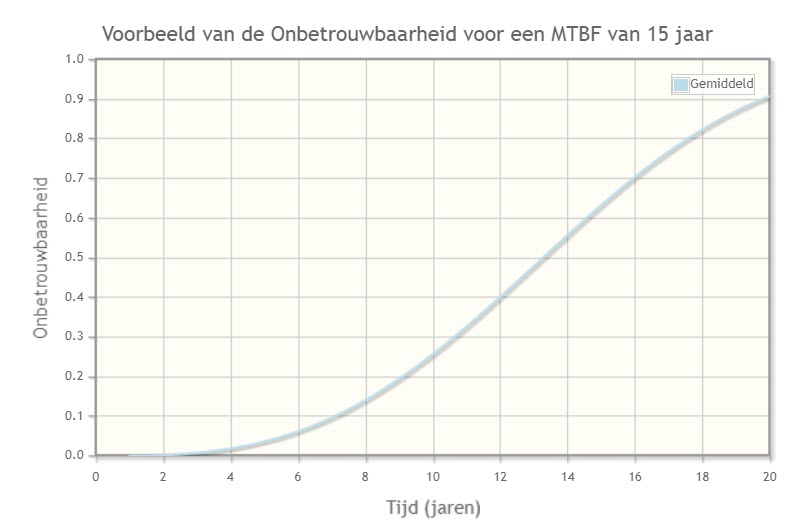
Rising failure mode
Think of ageing or wear. As an example you can look at your car or heating boiler. If you have or use them long enough, they will slowly decline in performance. If you do no maintenance, this phenomenon will show itself ever more clearly. Eventually it no longer functions at all. This failure mode is therefore called rising.
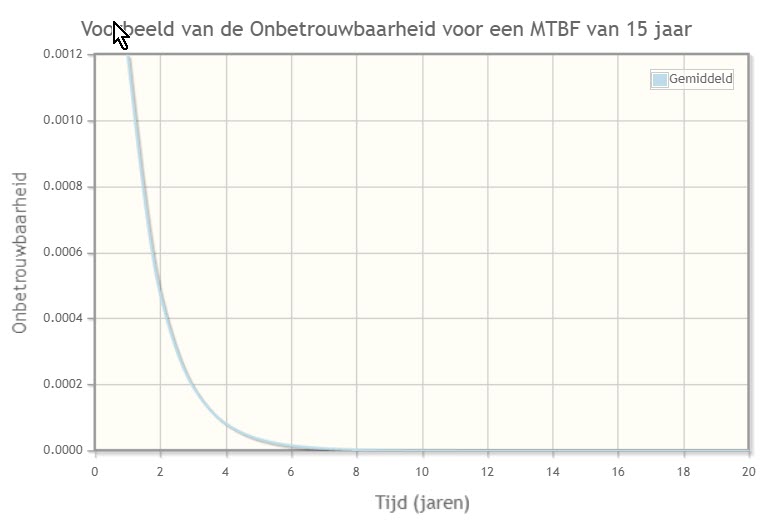
Falling failure mode
We also know a falling failure mode. This is common in newly designed items. When something comes onto the market new, there are still issues in it that only show themselves once it is put into practice. Think of recalls of certain cars or appliances. In time the manufacturer will have resolved these issues and the faults are a thing of the past.
Constant failure mode
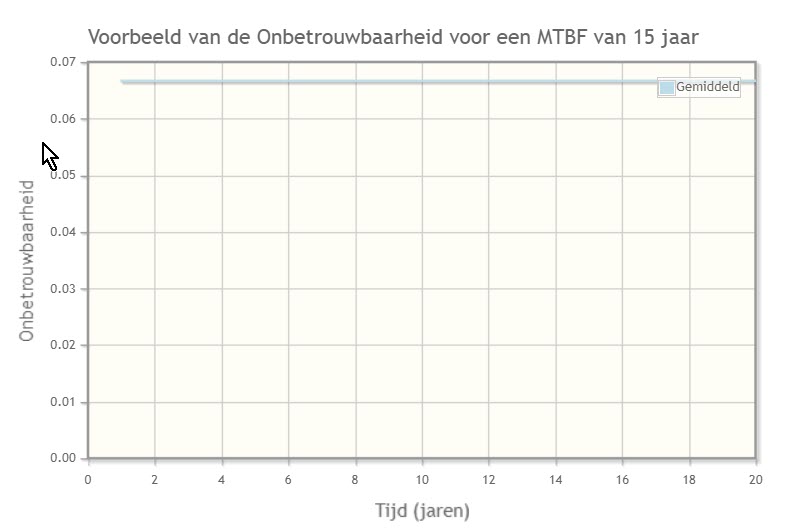
The last failure mode is the constant variant. This form has no progressive – rising or falling – profile. Whether you look on the first day, after a month, after a year or longer, it is the same at any moment. We know this form in much electronics. All kinds of equipment around us can fail from one moment to the next. We see no progression in the pattern beforehand.
Important: awareness of the different failure modes
When drawing up possible preventive measures and the frequency of carrying them out, it is important that we are aware of these failure modes.
🔶 With a falling form the activities will decrease from very frequent to almost nil.
🔶 By contrast, with a rising form the frequency of measures will actually increase.
🔶 The constant form makes it more difficult; there one often chooses to keep a spare part in stock.
The failure mode and the matrix are combined in Clarify. We explain this in part 3 ‘Risk Analysis’.